

 English
 русский
 Español
 中文简体

Custom Universal Joint Orders Require Accurate Fitment Data
Date:Oct 27, 2026
In the automotive aftermarket, a steering component can look similar to an existing part without matching its connection points or vehicle application. For importers, wholesalers, and replacement-parts distributors, confirming these details is an important step before adding a component to a catalogue or placing a repeat order. A Custom Universal Joint project therefore starts with identifying the intended assembly and the interfaces that the replacement part must match.
Universal joints connect sections of a steering shaft and transmit rotational movement through an angled connection. Their dimensions and connection arrangements affect how they fit within the larger assembly. For buyers sourcing non-standard or application-specific components, clear fitment information helps connect product development with aftermarket demand.
Vehicle Applications Need Specific Identification
Vehicle make and model provide a useful starting point, but they may not fully identify the required component. Model years, vehicle versions, and steering system configurations can affect replacement-part compatibility. Buyers should use available OE numbers and verified application information to narrow down the correct reference.
For a Custom Universal Joint, the product record should distinguish confirmed vehicle applications from possible cross-references. This is particularly important for distributors serving several markets, where model names and production years may vary by region.
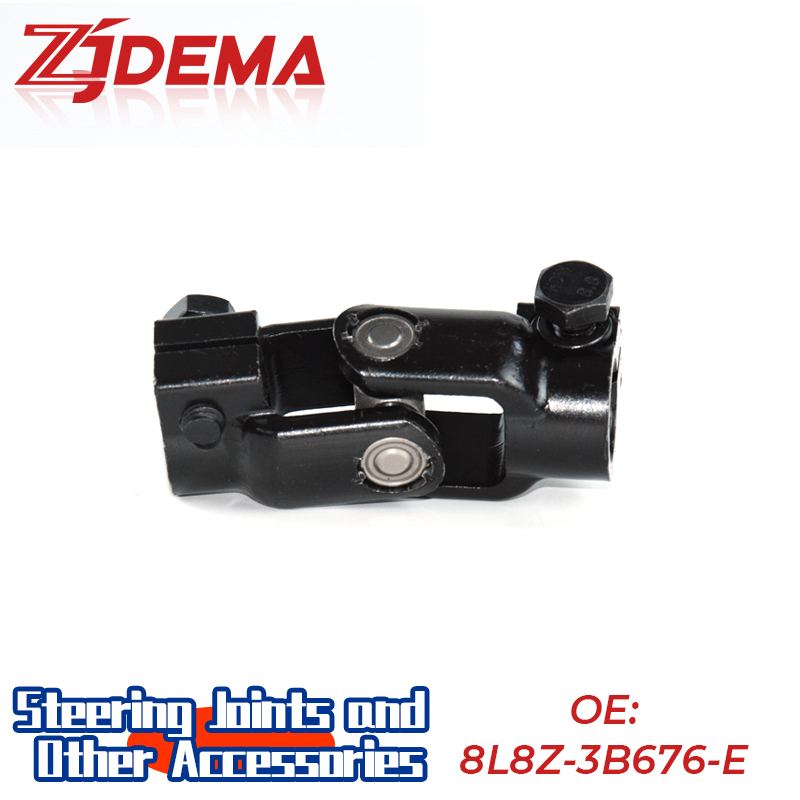
Zhejiang Demai Machinery's listed steering component, part number 8L8Z-3B676-E, is identified for selected Ford, Mercury, and Mazda applications, including the 2008–2012 Ford Kuga and Mercury Mariner. Such application details provide a more useful purchasing reference than a generic description such as steering joint alone.
Connection Details Matter Beyond Appearance
The universal joint must match the components connected to it. Depending on the assembly, relevant details may include yoke geometry, bearing cap dimensions, shaft connections, overall dimensions, and available installation clearance. A difference at a mating interface can prevent correct installation even when two parts appear similar externally.
When evaluating a Custom Universal Joint, buyers should provide technical drawings, an existing sample, or the original part number wherever possible. These references help clarify the geometry and identify the measurements that need confirmation. If a sample has been used in service, its wear or deformation should also be considered before treating it as the sole dimensional reference.
The intended position within the steering assembly is equally relevant. A universal joint used in a lower steering shaft connection may have different interface requirements from a joint used in another transmission application. Confirming the application prevents general functional similarity from being mistaken for direct interchangeability.
Manufacturing Must Follow the Component Requirements
Material and processing choices need to correspond with the component's geometry and operating requirements. Demai's product information identifies forging and high-strength iron for its listed 8L8Z-3B676-E steering joint. The company's broader manufacturing range also includes steering shafts, steering joints, and universal joints.
For a Custom Universal Joint, buyers should establish which material and production requirements apply to the specific project rather than assuming that every joint uses the same process. Where a replacement must match an established part, the reference specification and agreed technical requirements should guide production.
Manufacturing capability is also relevant when a project involves a revised connection or a different application. Drawings and samples give the engineering team a basis for assessing the proposed component, while clear revision records help separate a new configuration from an existing catalogue item.
Inspection Should Reflect Fitment Requirements
A dimensional check is useful only when it covers the features that determine fit and assembly. Depending on the component, this may include connecting dimensions, bearing cap positions, critical lengths, and the alignment of mating surfaces.
Before approving a Custom Universal Joint, buyers should identify the key dimensions and any additional verification requirements relevant to the application. This information can be recorded in the drawing or agreed inspection documentation, giving both parties a consistent reference.
Sample approval should also be linked to a clearly identified part number or revision. If the interface geometry, material, or other agreed requirement changes, the revised component should be reviewed against the updated specification. This helps prevent an approved sample from being treated as automatic approval for a different version.
Product Records Support Repeat Purchasing
Once a component has been accepted, the approved product record becomes a reference for purchasing, warehouse identification, and future replenishment. Useful information includes the part number, confirmed vehicle applications, connection details, material requirements, and applicable inspection records.
For distributors sourcing a Custom Universal Joint, consistent records help distinguish similar components and reduce confusion when managing multiple aftermarket references. They also make it easier to review a proposed substitute before it is added to an existing product range.
When repeat orders or new applications require changes, the updated details should be confirmed before production proceeds. Keeping fitment information connected to the approved component helps manufacturers and buyers maintain clearer communication from initial evaluation to recurring orders.
For automotive parts businesses, the value of a Custom Universal Joint lies in more than its general function. Accurate application identification, compatible interfaces, and controlled product records provide a practical foundation for supplying the correct component to the intended steering system.
Recommended Articles
No. 228, Yongning Road, Xiping Street, Songyang County, Zhejiang, China 323400
+86-578-8066777 (Fax)
+86-578-8066585 / +86-578-8066520(Tel)
+86-18157882233 / +86-19905880068(Cellphone/WeChat)
+86-13506650773 / +86-19905880068(Whatsapp)
sales_nicole@zjdemai.com / sales_janny@zjdemai.com (Email)
