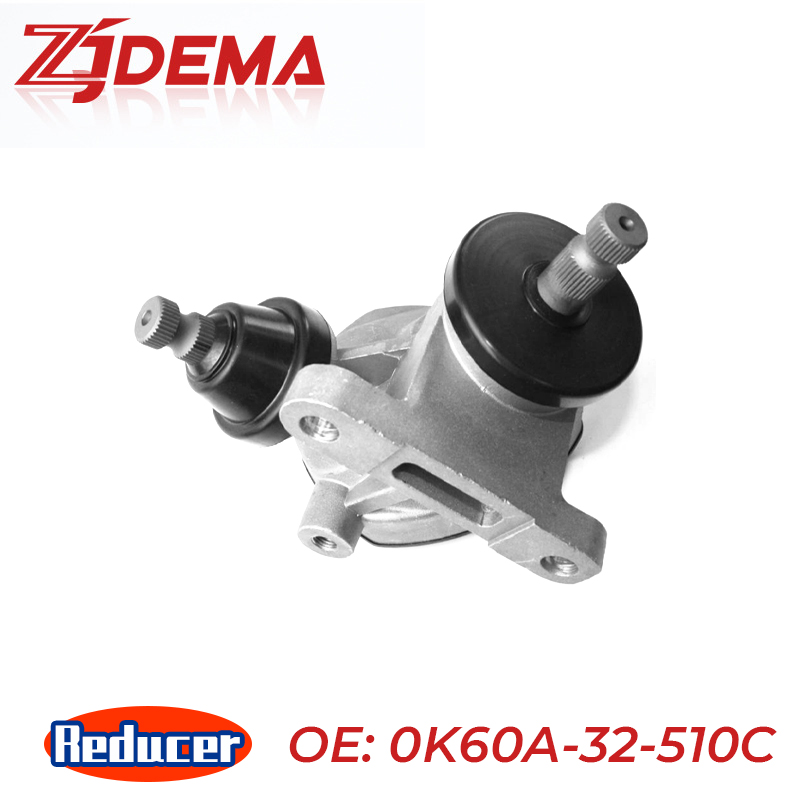
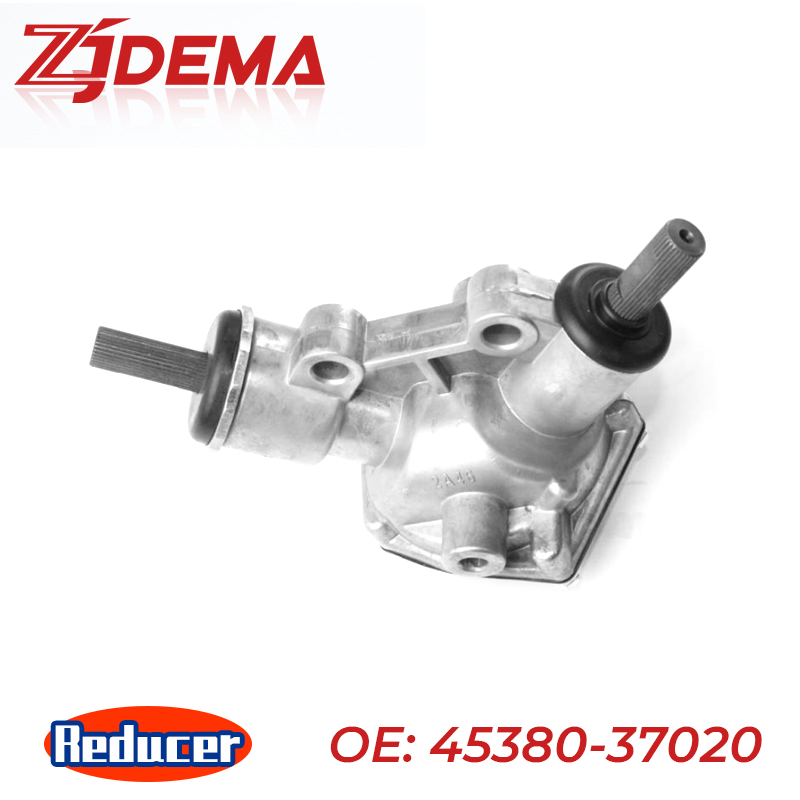
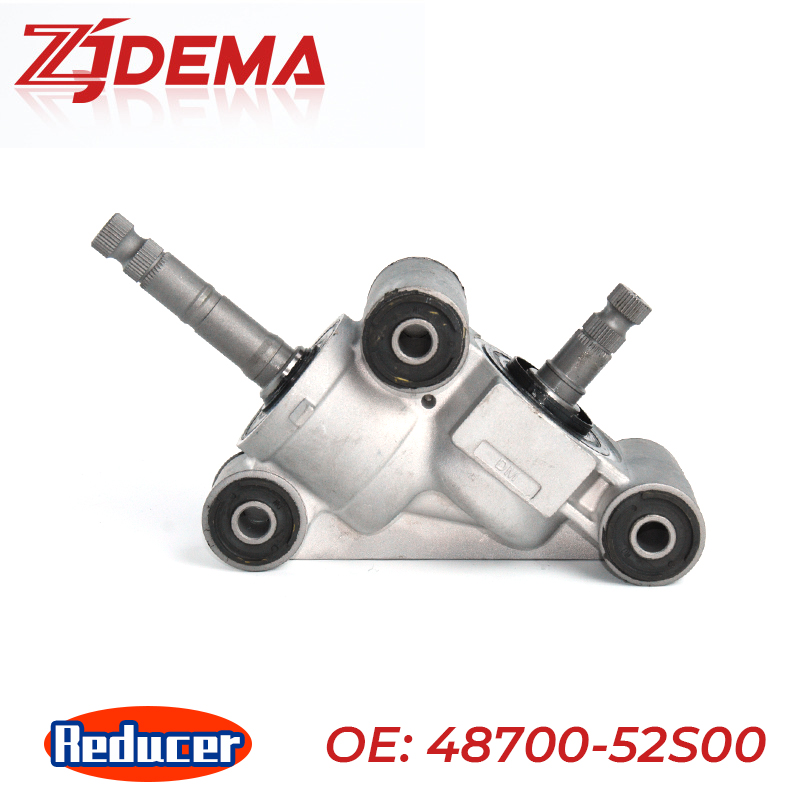
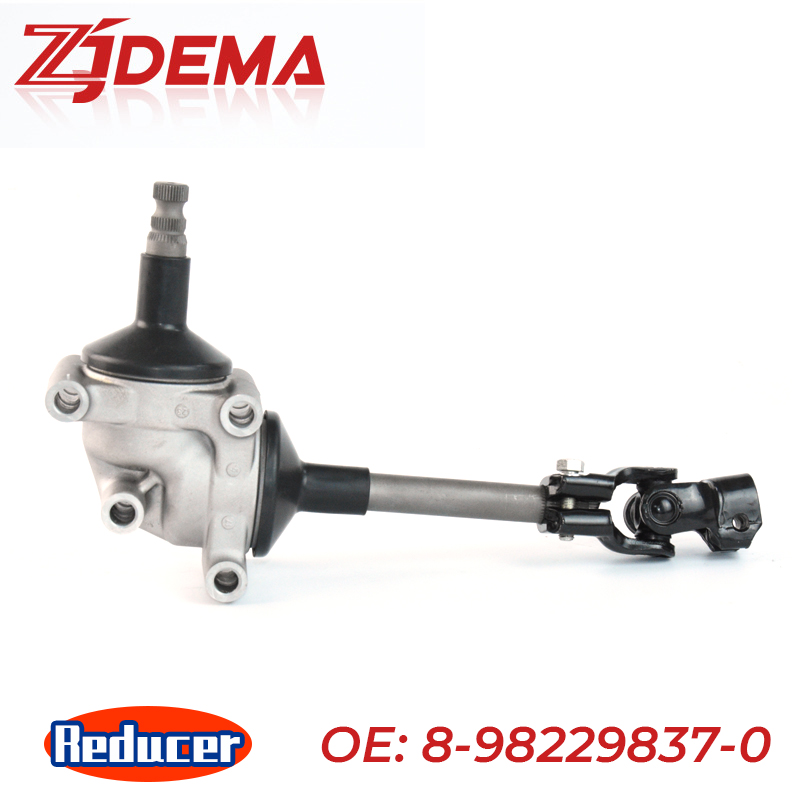
The automobile reducer serves as a core component in the power transmission system, performing critical functions such as speed reduction with torque enhancement, directional differential adjustment, and energy conservation. It directly impacts the vehicle's driving performance, ride comfort, and energy efficiency.
I. Core Advantages of Automotive Reducers
High-efficiency deceleration with torque enhancement, significantly improving driving force
The reducer converts the high rotational speed (up to 80,000 rpm) from the motor or engine into the required low speed (500–2,000 rpm) for the wheels through gear ratios, while proportionally amplifying the output torque. For instance, a reducer with a speed ratio of 9.3:1 can increase torque by over ninefold, providing more robust power for vehicles during acceleration, hill climbing, or heavy-load operations.
Optimize power delivery direction to adapt to various layouts
For longitudinally mounted engine vehicles, the reducer utilizes bevel gears or double-curved gears to convert longitudinal power output into lateral transmission to the wheels, meeting the layout requirements of front-wheel drive, rear-wheel drive, or four-wheel drive systems.
Integrated differential function ensures turning stability
The reducer typically incorporates a differential mechanism internally, which automatically adjusts the speed difference between left and right wheels during vehicle turns (with the outer wheels rotating 20%-40% faster). This design prevents tire slip, friction, and abnormal wear, thereby enhancing driving safety and ride comfort.
High transmission efficiency, boosting energy efficiency, and range
Buffer mechanical shocks to extend system lifespan
The precision gear structure can absorb impact loads during startup or on bumpy road conditions, dispersing 30%-50% of mechanical stress to effectively protect the motor and transmission system, thereby extending their service life.
II. Main Application Scenarios
New energy vehicle drive system
Pure electric vehicles generally adopt single-stage reducers, which are characterized by simple structure and high efficiency, with a transmission ratio typically ranging from 3.5 to 6.5.
Hybrid vehicles require power coupling between the engine and motor, which imposes higher demands on the integration and control precision of the reducer.
Powertrain of Traditional Fuel Vehicles
In manual or automatic transmissions, each gear essentially functions as a multi-stage reduction device. The main reducer is typically integrated with the differential on the rear axle, forming the power output terminal.
Lateral-engine vehicles predominantly utilize cylindrical gear reducers, whereas longitudinal-engine models typically employ helical bevel gear configurations.
Commercial Vehicles and Special Purpose Vehicles
Heavy-duty trucks and construction machinery utilize two-stage or wheel-side reducers to meet the demands of high torque and heavy loads.
In the four-wheel drive system, the reducer participates in the torque distribution between the front and rear axles, thereby enhancing off-road performance.
III. Key Production Process Flow
Gear Design and Simulation Optimization
Digital modeling and stress analysis were conducted using topology optimization technology to achieve a balance between lightweight and high strength, with some designs demonstrating weight reduction exceeding 15%.
Mold Forming and Heat Treatment of Green
The gears are made of 20CrMnTiH series carburized steel, which is formed by die forging and then carburized and quenched to form a hardened layer of 0.5~1mm, which can significantly improve the wear resistance and fatigue life.
The hardness can reach HRC58-62 after heat treatment, and the straightness error is less than 0.05mm/m.
Precision Machining Process
The CNC gear grinding machine performs surface finishing with tooth profile errors controlled within 0.01mm, achieving ISO 4-5 class machining accuracy.
Advanced processes such as precision forging and gear grinding were applied to enhance load-bearing capacity and operational stability.
Assembly and Inspection
The assembly of components such as gears, bearings, and differentials is completed in the cleanroom.
The finished product must undergo rigorous validation, including vibration testing, noise measurement, and durability trials, and must comply with ISO or QC/T standards.
Intelligent Manufacturing Trends
Guiding enterprises have adopted digital twin and AI diagnostic systems to establish a closed-loop mechanism of "perception-simulation-intervention", enabling predictive maintenance and reducing lifecycle costs.
IV. Common Materials and Their Properties
High-performance gear steel
20CrMnTiH: With an application rate of 67%, it exhibits good carburizing properties and fatigue resistance.
40Cr/42CrMo alloy steel: Designed for high-load applications, it offers good strength and is suitable for heavy-duty vehicles.
Lightweight structural materials
Advanced Lubrication and Sealing Materials
The directional oil lubrication system enhances heat dissipation efficiency to ensure suitable lubrication performance under high-speed operating conditions.
The combination of polyurethane oil seal and rubber dust cover achieves an IP67 protection rating, extending maintenance intervals.




 English
 русский
 Español
 中文简体
中文简体