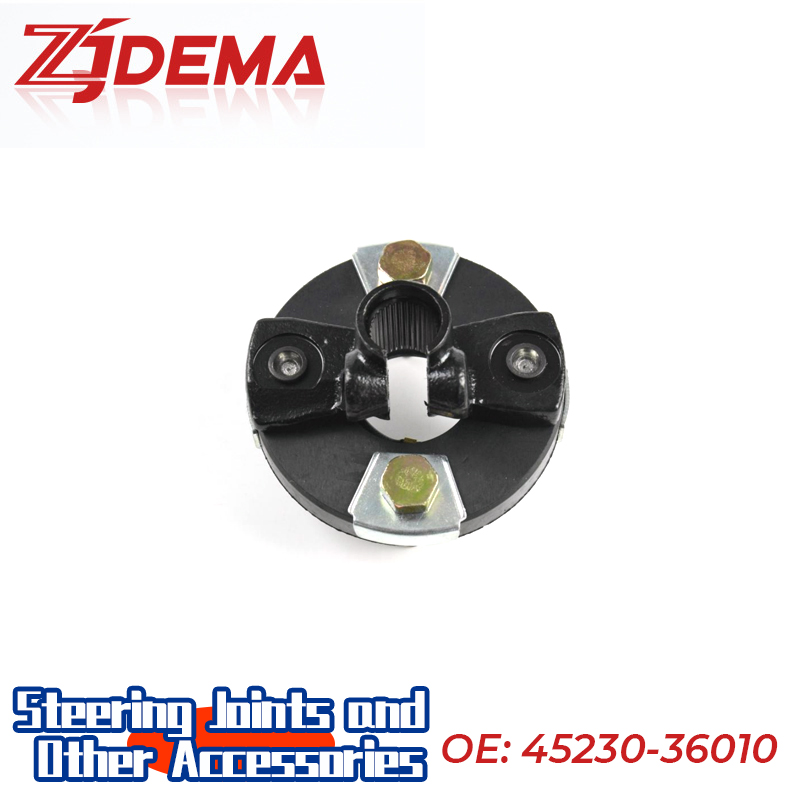
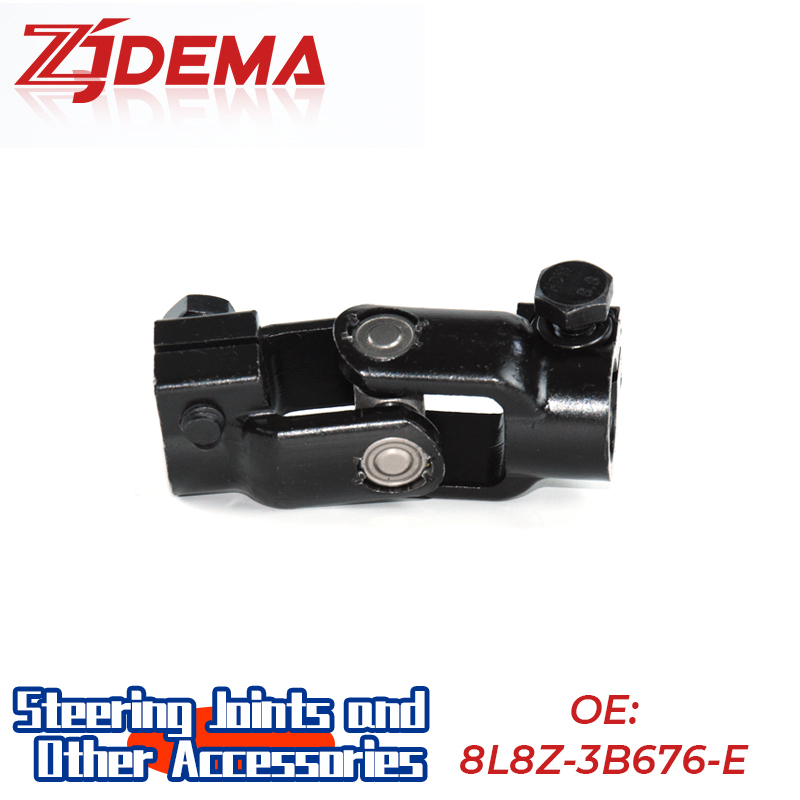
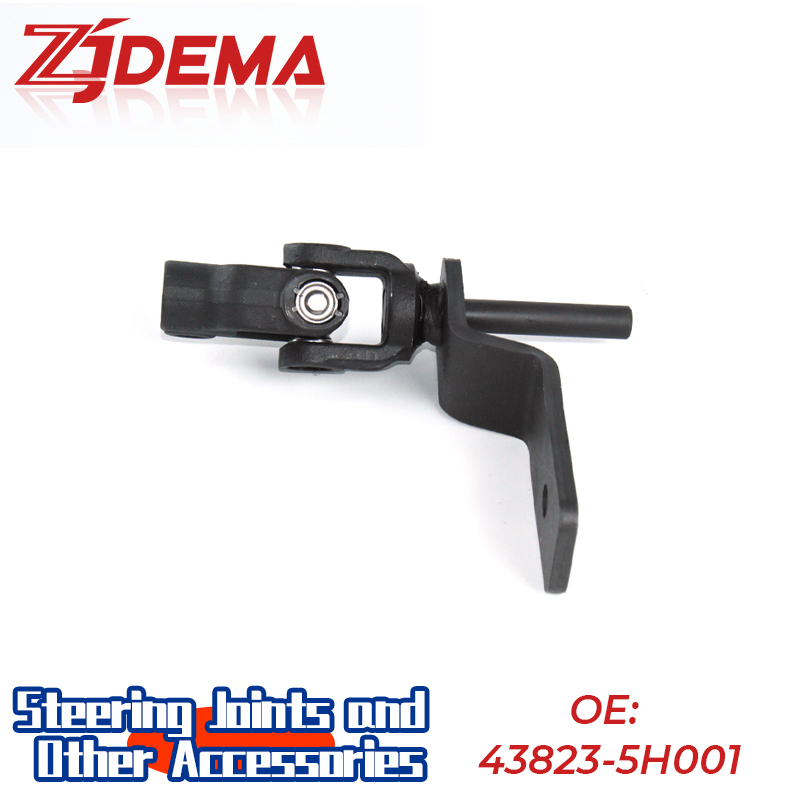
As a critical component of automotive steering systems, steering shaft accessories directly influence steering precision, handling responsiveness, and driving safety. Premium steering axle components not only elevate the driving experience but also ensure system reliability under extreme conditions.
I. Core Advantages of Steering Axle Components
High rigidity and precise transmission
Components such as universal joints and spline shafts are fabricated from high-strength materials with precision machining, ensuring lossless and instantaneous transmission of steering torque while enhancing steering wheel alignment force and road sensing feedback.
Energy-absorbing safety design to protect the driver
The partial swivel axle assembly is integrated with an energy-absorbing structure, which can absorb impact energy through the collapse of the axle body or the disengagement of the connecting parts during a collision, thereby reducing the risk of chest injury to the driver.
Fatigue Resistance
Through quenching and tempering heat treatment combined with dynamic balance calibration, the critical components can withstand long-term repeated torsional loads, with a service life exceeding 200,000 kilometers.
Highly sealed and Protective
The dust cover and sealing components effectively block sand and moisture intrusion, preventing premature wear of splines and bearings. Some high-end products achieve an IP67 protection rating.
Modular design facilitates maintenance and replacement
The standardized interface enables quick disassembly and assembly, allowing for individual replacement of components like the lower steering shaft or universal joint, thereby reducing maintenance costs and labor hours.
II. Main Application Scenarios
Passenger vehicle sector
Widely used in sedans, SUVs, MPVs, and other vehicle models, brands like Nissan Sylphy and Mercedes-Benz C-Class rely on factory-spec steering shaft components to ensure driving stability.
New energy vehicles demand higher noise reduction performance, typically employing low-friction coatings and optimized universal joint designs.
Commercial Vehicles and Special Purpose Vehicles
Construction machinery (such as small loaders and billet carriers) employs shock-absorbing steering axles to absorb vibrations in gravel roads, thereby enhancing operational comfort.
Three-wheeled vehicles and electric transport vehicles employ steering axles reinforced with dual clamping plates and compatible pipe designs to enhance structural stability.
agricultural machinery
Tractors, harvesters, and similar equipment achieve directional control through steering shafts, requiring components to possess impact resistance and durability characteristics.
Modification and After-sales Upgrade Market
Owners of high-performance vehicles frequently replace original factory parts with forged alloy steel or lightweight aluminum alloy steering axles to enhance steering responsiveness and driving confidence.
III. Key Production Process Flow
Raw material preparation
Select high-quality seamless steel pipes or alloy steel bars as blanks to ensure uniform material quality and absence of internal defects.
Spinning Internal spline forming
The inner and outer diameters of the tube are reduced by cold spinning forging, and the inner wall is fitted with a mandrel to form a high-precision internal spline. The material is hardened, and the strength is increased.
Mechanical Processing and Heat Treatment
The CNC lathe performs precision machining on external cylindrical surfaces, end faces, and spline sections, with dimensional tolerances controlled within ±0.02mm.
Quenching and high-temperature tempering treatment yield a tempered sorbite structure, achieving a balance between strength and toughness.
Surface Treatment and Anti-corrosion
Electrophoretic coating, phosphating, or chromium plating enhances corrosion resistance, making it suitable for humid and salt spray environments.
Some high-end components utilize a Teflon coating to reduce friction resistance.
Assembly and Inspection
Automated assembly of components, including universal joints, bearings, and dust covers.
The finished products should pass the static torsion strength, torsion fatigue life, sliding starting force, and other tests.
IV. Common Materials and Their Properties
Mainstream metallic materials
Seamless steel pipe: Lightweight and high-strength, it is the commonly used material for steering shaft bodies, outperforming solid shafts and cast iron.
45 steel / 40Cr alloy steel: after quenching and tempering treatment, it has good comprehensive mechanical properties, which are widely used in middle and high-end models.
High-strength alloy steels (e.g., 42CrMo) are designed for heavy-duty vehicles or performance vehicles, with tensile strength exceeding 1000 MPa.
Rubber/polyurethane: Used for dustproof sleeves and bushings, exhibiting good elasticity and wear resistance.
Engineering plastics: Used for non-load-bearing components such as cages and sealing rings to reduce weight and noise.




 English
 русский
 Español
 中文简体
中文简体