


 English
 русский
 Español
 中文简体

Steel Car Part: Where Material Meets Drivetrain Precision
Date:Oct 02, 2026
Steel remains a common material for drivetrain components because it can be forged, machined, heat-treated, and finished for different mechanical requirements. A Steel Car Part may look straightforward after production, but its actual role depends on dimensions, material grade, surface condition, and connection points. For aftermarket distributors and vehicle component buyers, these details determine whether a replacement part can work correctly inside an existing transmission assembly.
Material Starts With the Application
A Steel Car Part is rarely specified only by its material. Components located around the driveshaft, universal joint, or transmission connection can experience different combinations of torque, vibration, impact, and repeated loading.
Within steel transmission parts, manufacturers may select different grades according to the component's working conditions. Common carbon and alloy steels can offer different combinations of machinability, strength, and toughness after processing.
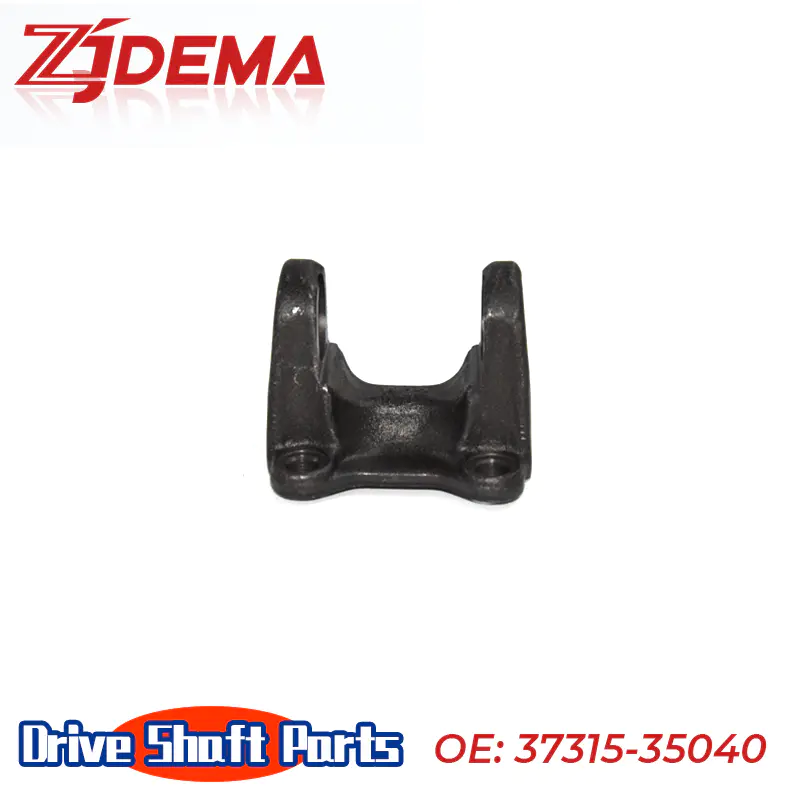
The starting point is therefore the part's actual position in the vehicle and the mechanical loads associated with it.
Forging Creates the Initial Shape
Many drivetrain components begin as forged blanks. Forging can establish a basic geometry before machining creates the precise surfaces needed for assembly.
For a Steel Car Part, the production route may then include turning, milling, drilling, grinding, and other machining operations. This approach is useful for parts that require both substantial metal sections and accurately positioned interfaces.
For drivetrain repair components, starting with a suitable forged blank can also provide a repeatable basis for producing model-specific replacement parts.
Heat Treatment Changes Performance
Machining determines the shape of the component, while heat treatment influences the mechanical properties of the steel. Depending on the application, manufacturers may use quenching, tempering, carburizing, or other treatments.
A Steel Car Part operating under repeated torsional loading may require different treatment from a component mainly used as a structural connection. Hardness and toughness also need to correspond with the expected operating conditions.
For steel transmission parts, heat treatment is therefore part of the component specification rather than a universal process applied to every product in the same way.
Precision Matters at Mechanical Interfaces
A drivetrain component must fit with several surrounding parts. Bore diameter, spline profile, flange dimensions, shaft position, and mounting surfaces can all influence installation.
A Steel Car Part can have only a few critical interfaces, yet those areas require consistent machining. Small dimensional differences can change clearance or create an incorrect relationship with bearings, shafts, joints, or housings.
This is especially relevant for drivetrain repair components, which need to fit an existing vehicle assembly rather than a newly developed system.
Surface Treatment Has a Practical Role
After machining and heat treatment, steel components may receive a surface finish selected for their operating environment. Black finishes, protective coatings, plating, or other treatments can contribute to corrosion resistance and surface condition.
For a Steel Car Part, the selected treatment also needs to suit areas where the component contacts seals, bearings, splines, or other drivetrain parts.
Surface treatment can be particularly relevant for steel transmission parts exposed to road moisture, dust, temperature changes, and other external conditions.
Replacement Parts Need Specific Identification
Vehicle systems contain many components that can appear similar. A replacement with the same general shape may still differ in length, spline count, bore size, flange pattern, or mounting arrangement.
When purchasing a Steel Car Part, buyers can use OE numbers, vehicle model information, drawings, and measured dimensions to identify the required version.
For drivetrain repair components, this level of identification becomes especially useful when several variations exist within the same vehicle platform.
Manufacturing Consistency Supports Repeat Orders
B2B buyers may need the same component repeatedly across different purchasing cycles. Consistency in steel grade, forging, machining, heat treatment, and inspection can therefore affect long-term sourcing.
A Steel Car Part program may include multiple model-specific versions, each with different dimensions and connection details. Manufacturers need controlled processes to keep these variations separate while maintaining consistent production.
Inspection can cover critical dimensions, hardness, surface condition, runout, and other specifications established for the individual component.
Steel Remains Adaptable Across Drivetrain Applications
The continued use of steel in vehicle components comes from its ability to support several manufacturing processes. Forging establishes the basic form, machining creates precise interfaces, and heat treatment adjusts the material for the intended service conditions.
A Steel Car Part should therefore be evaluated as part of the complete power-transmission system rather than as an isolated metal component. For B2B buyers, material grade, manufacturing route, dimensional accuracy, finishing, and vehicle compatibility are practical comparison points.
As vehicle platforms continue to use different transmission configurations, steel transmission parts remain an important category for aftermarket and OEM supply. The combination of Steel Car Part manufacturing and model-specific machining allows replacement components to address different drivetrain structures without requiring an entirely new production concept for every application.
Recommended Articles
No. 228, Yongning Road, Xiping Street, Songyang County, Zhejiang, China 323400
+86-578-8066777 (Fax)
+86-578-8066585 / +86-578-8066520(Tel)
+86-18157882233 / +86-19905880068(Cellphone/WeChat)
+86-13506650773 / +86-19905880068(Whatsapp)
sales_nicole@zjdemai.com / sales_janny@zjdemai.com (Email)
