


 English
 русский
 Español
 中文简体
中文简体
Steel Steering Column Design Balances Strength With Steering Precision
Date:Sep 18, 2026
The steering system has little room for inconsistency. Every movement of the steering wheel has to be transmitted through a series of mechanical components before it reaches the steering gear and ultimately changes the direction of the vehicle. At the center of this mechanical connection is the steering column and shaft assembly. A Steel Steering Column remains a practical choice for applications where structural strength, torsional stiffness, and dependable mechanical transmission are important.
Although the component may appear relatively simple from the outside, its internal structure can include shafts, joints, bearings, mounting sections, and connection interfaces. These elements have to work together while fitting within the limited space available inside a vehicle.
Steel Provides A Strong Structural Foundation
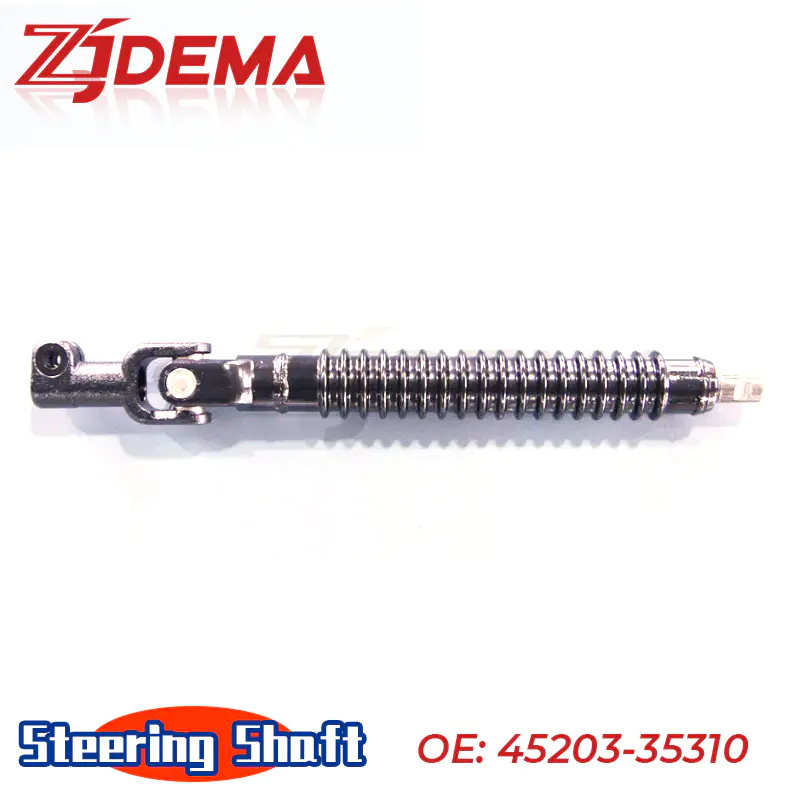
Steering components experience repeated loads throughout the life of a vehicle. The shaft must transmit steering torque while the surrounding column supports the steering wheel and associated components.
Steel provides a combination of strength and stiffness that makes it suitable for these demanding mechanical conditions. The actual grade and construction can vary according to the application, but material selection remains closely connected with the expected loads, dimensions, and manufacturing process.
For a Steel Steering Column, simply choosing a strong material is not enough. The geometry of the shaft and supporting structure also determines how forces are distributed through the assembly.
The Shaft And Column Serve Different Roles
The terms steering column and steering shaft are sometimes used interchangeably, but they perform different functions within the assembly.
The steering shaft provides the rotational connection between the steering wheel and steering gear, while the column provides structural support around the shaft and connects the steering assembly to the vehicle structure.
Depending on the vehicle design, the assembly may also incorporate universal joints, intermediate shafts, sliding sections, or adjustment mechanisms. These components allow the steering system to accommodate changes in geometry while maintaining the transmission of steering input.
Connection Geometry Determines Fitment
Steering shafts need to connect precisely with mating components. Splines, yokes, flanges, threads, and other interfaces can vary between vehicle platforms.
A small dimensional difference at one connection can affect assembly or introduce unwanted movement in the steering system. This makes machining accuracy particularly important for the end sections of the shaft.
During development of a Steel Steering Column, manufacturers therefore need to consider not only the overall shaft length and diameter but also the exact geometry of the interfaces that connect the assembly to the steering wheel, intermediate shaft, or steering gear.
Angular Movement Requires Flexible Connections
The steering wheel and steering gear are not always positioned on one perfectly straight axis. Vehicle packaging, engine-bay layout, suspension geometry, and body structure can require changes in direction along the steering path.
Universal joints and intermediate shaft arrangements help accommodate these differences. The steering assembly can transmit rotational movement through an angled path while maintaining the required mechanical relationship between components.
This makes joint position and shaft geometry important parts of the overall design. A steering component has to fit the vehicle architecture rather than simply function as an isolated rotating shaft.
Manufacturing Accuracy Influences Steering Feel
Steering systems are sensitive to unwanted play, vibration, and irregular movement. Manufacturing processes therefore need to maintain control over critical dimensions and connection surfaces.
Turning, milling, forming, spline processing, welding, and other operations may be used depending on the construction of the component. After machining, dimensional inspection can verify important features before assembly.
For steel components, surface treatment may also be applied where corrosion protection is required. The appropriate treatment depends on the material, vehicle environment, and design requirements.
Safety Requirements Shape Column Design
Steering columns have an additional consideration that distinguishes them from many ordinary rotating shafts: their relationship with vehicle occupant safety.
Modern steering column designs can incorporate mechanisms intended to manage movement or energy during a collision. Adjustable and collapsible structures are examples of how the steering assembly can be designed around both normal driving and abnormal loading conditions.
This means a Steel Steering Column cannot be evaluated solely by its ability to transmit steering torque. Its structural arrangement, mounting points, adjustment mechanism, and interaction with other steering components all contribute to the complete system design.
Vehicle Diversity Creates More Column Configurations
Passenger cars, SUVs, commercial vehicles, and specialized vehicles can have substantially different steering layouts. Some require adjustable steering positions, while others prioritize compact packaging or additional structural support.
As a result, steering column production increasingly involves application-specific dimensions and configurations rather than one universal design. Shaft profiles, connection interfaces, joint positions, and support structures can all change according to the vehicle platform.
For manufacturers and automotive component buyers, understanding these requirements early can simplify the transition from vehicle design to component production.
Strength And Precision Need To Work Together
A Steel Steering Column combines structural and rotational functions within a system where reliability is essential. Steel provides a strong foundation, but the final performance also depends on shaft geometry, connection accuracy, joint arrangement, manufacturing consistency, and the surrounding support structure.
As vehicle platforms continue to diversify, steering components must fit increasingly specific packaging and performance requirements. The development of steel steering columns is therefore not simply about making a stronger shaft. It is about producing a precisely manufactured assembly that can transmit steering input consistently while fitting the mechanical and safety requirements of the vehicle.
Recommended Articles
No. 228, Yongning Road, Xiping Street, Songyang County, Zhejiang, China 323400
+86-578-8066777 (Fax)
+86-578-8066585 / +86-578-8066520(Tel)
+86-18157882233 / +86-19905880068(Cellphone/WeChat)
+86-13506650773 / +86-19905880068(Whatsapp)
sales_nicole@zjdemai.com / sales_janny@zjdemai.com (Email)
